
Choosing the right crane can feel overwhelming when so many types exist, each with its own design, features, and applications. The problem is that selecting the wrong crane affects productivity and can create safety risks, increase maintenance costs, and limit your ability to handle critical lifting tasks. Many companies face the same challenge: should they invest in an overhead crane, go with a gantry, or consider an EOT crane? Without clarity, this decision often leads to costly mistakes.
But here’s the good news: once you understand the differences between overhead, gantry, and EOT cranes, the decision becomes much clearer. Each crane has unique strengths that make it the best fit for specific environments and industries. In this overhead vs. gantry vs. EOT cranes breakdown, we’ll explain how each crane works, where it’s most effective, and how to choose the right one for your needs.
Table of Contents
- What is an Overhead Crane?
- What is a Gantry Crane?
- What is an EOT Crane?
- Comparing Overhead, Gantry, and EOT Cranes
- Choosing the Right Crane for Your Needs
- Overhead vs. Gantry vs. EOT Cranes: The Verdict
- Quick FAQs About The Key Differences of Overhead, Gantry, and EOT Cranes
What is an Overhead Crane?
Overhead cranes are some of the most widely used lifting systems in industrial facilities. They operate on elevated tracks or beams and are ideal for handling heavy loads across large areas. These cranes are often found in warehouses, steel plants, and factories where efficiency and durability matter most. By moving loads along a set path, overhead cranes make it easier to streamline material handling inside a facility.
Despite their advantages, overhead cranes also come with a high upfront cost and require proper installation within a building structure. Businesses must ensure their facilities are designed to support the rails and beams. While the investment is significant, overhead cranes are known for their long-term reliability and ability to manage very heavy loads.
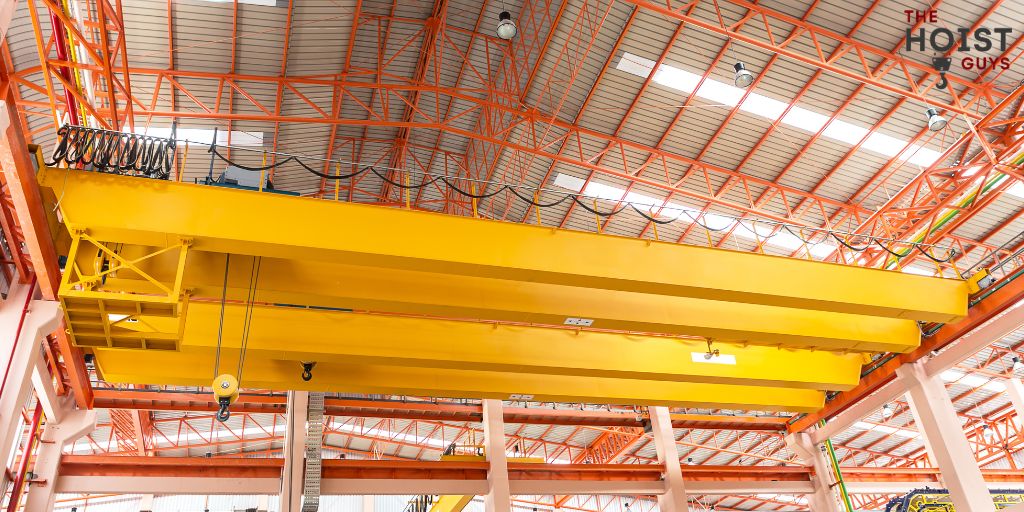
Basic Structure and Design of Overhead Cranes
An overhead crane typically consists of a bridge, trolley, and hoist system. The bridge runs along elevated rails, while the trolley moves horizontally across the bridge. The hoist then lifts and lowers the load with precision. This design allows overhead cranes to cover large spans of workspace and handle heavy-duty lifting with ease.
Common Industrial Applications of Overhead Cranes
Overhead cranes are used in industries that require safe and consistent movement of bulky items. They are common in steel production facilities, automotive assembly lines, and warehouses. Their ability to move items across long distances inside a building makes them essential for high-volume material handling.
Pros and Cons of Overhead Cranes
Overhead cranes are extremely efficient for lifting very heavy loads and moving them across large indoor spaces. They’re built for durability and long-term use, which is why industries like steel and automotive rely on them daily. Their ability to improve workflow in production-heavy environments makes them a worthy investment.
✔️ Handles very heavy loads, excellent for large-scale operations, long-lasting with proper care
❌ Expensive to install, requires permanent building support, limited to indoor use
💡 While the benefits are clear for businesses that need reliable lifting equipment, the drawbacks may discourage smaller operations with limited budgets. Still, for long-term heavy-duty work, overhead cranes remain one of the best solutions.
What is a Gantry Crane?
Unlike overhead cranes, gantry cranes do not rely on a building’s structure. Instead, they are freestanding and supported by legs that run on rails or wheels. This makes them more flexible and adaptable for both indoor and outdoor use. Because they don’t require permanent installation, gantry cranes are often more affordable upfront.
Their mobility makes them especially useful in shipyards, construction sites, and outdoor storage facilities. However, while gantry cranes are versatile, they may not be as durable for continuous heavy-duty lifting as fixed overhead cranes.
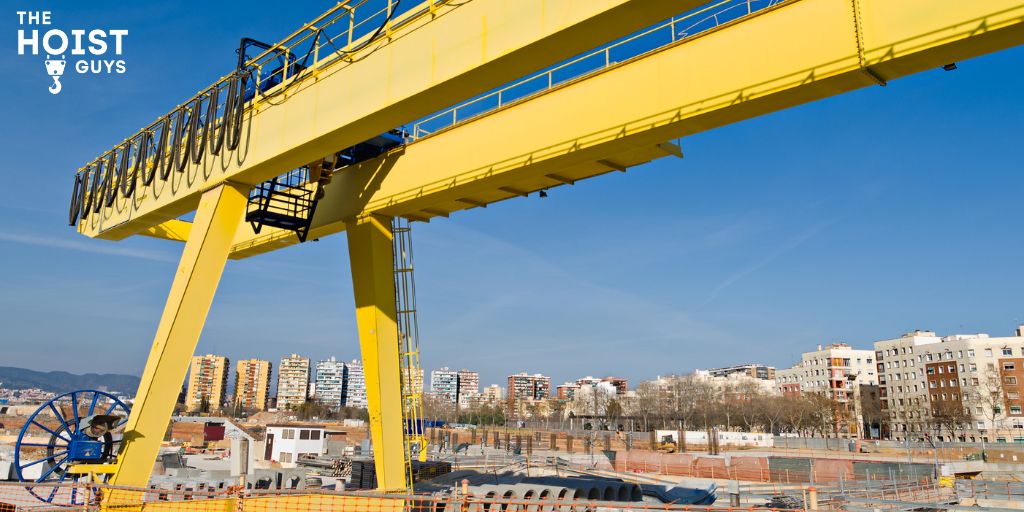
Structural Features and How Gantry Cranes Operate
A gantry crane consists of a bridge supported by two legs, which move along rails or wheels. The hoist runs on the bridge, similar to an overhead crane, but the system can be relocated when necessary. This portability makes gantry cranes suitable for temporary projects or outdoor operations.
Gantry Cranes in Different Work Environments
Gantry cranes are widely used in ports, shipping yards, and construction zones. They can lift shipping containers, large pipes, and other heavy materials in open environments. Workshops and maintenance facilities also use smaller gantry cranes for indoor operations where overhead cranes may not be practical.
Advantages and Limitations of Gantry Cranes
Gantry cranes provide more flexibility than overhead cranes because they are freestanding and mobile. They can be used indoors or outdoors without requiring permanent building structures, making them ideal for businesses that need portability. Their upfront cost is also lower, which appeals to companies handling mid-range lifting needs.
✔️ Lower installation cost, flexible setup, usable indoors or outdoors
❌ Less durable for constant heavy lifting, may require frequent repositioning
💡 For temporary worksites, gantry cranes are excellent, but for constant indoor heavy lifting, they may not deliver the same level of durability as overhead cranes.
What is an EOT Crane?
Electric Overhead Traveling (EOT) cranes are advanced versions of overhead cranes powered by electricity. They are widely used in industries that require frequent and heavy lifting, such as steel plants, power plants, and large manufacturing facilities. EOT cranes offer precise control, higher lifting capacity, and can be fully automated for efficiency.
The biggest advantage of EOT cranes is their ability to handle repetitive lifting with minimal manual intervention. However, they come with higher maintenance needs compared to manual or gantry systems. Despite this, their speed and efficiency make them the go-to choice for industries that demand constant heavy lifting.

Key Features of Electric Overhead Traveling Cranes
EOT cranes run on electric motors and are operated through wired or wireless controls. They can move loads both vertically and horizontally with high precision. Many models also include advanced safety features like overload protection and anti-sway technology.
Industries That Rely on EOT Cranes
These cranes are heavily used in steel manufacturing, automotive production, and large-scale assembly lines. Power plants also depend on EOT cranes for moving turbines and other heavy equipment. Their strength and automation make them essential for industries that cannot afford downtime.
Benefits and Challenges of Using EOT Cranes
EOT cranes are fast, efficient, and capable of lifting extremely heavy loads. However, they require skilled operators and consistent maintenance to ensure safety. While the initial cost is high, the return on investment comes from improved productivity and reduced manual labor.
Comparing Overhead, Gantry, and EOT Cranes
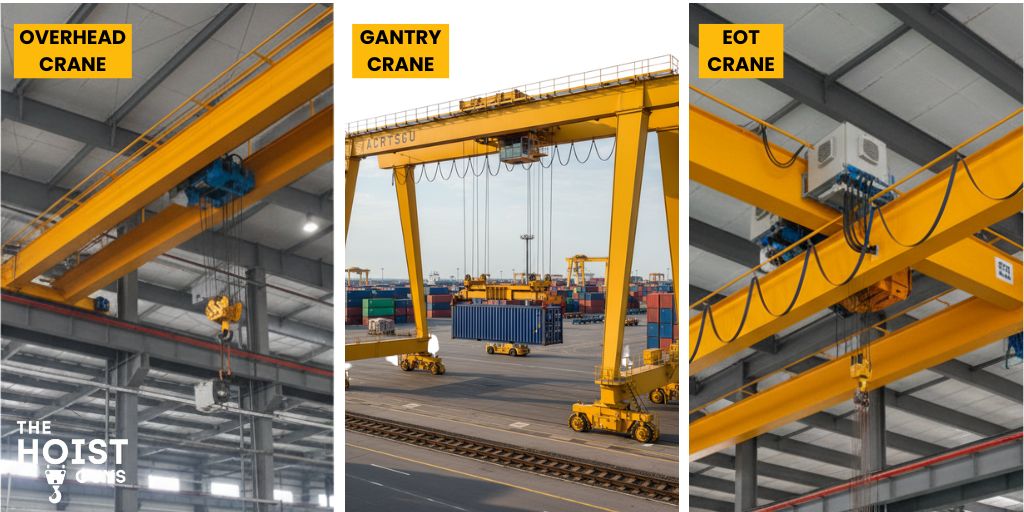
When comparing these three cranes, the most obvious difference is structure. Overhead cranes are fixed to a building, gantry cranes are freestanding, and EOT cranes are electrically powered versions of overhead systems. Each has unique strengths that make them better suited for specific environments and tasks.
Beyond structure, cost and long-term value also play a big role. Overhead and EOT cranes involve higher upfront investment but deliver durability and efficiency for decades. Gantry cranes, while more affordable, may need replacement or repositioning sooner depending on usage.
Structural and Operational Differences
The most significant difference among overhead, gantry, and EOT cranes lies in how they are built and function. Overhead cranes are fixed and depend on a building’s support system, while gantry cranes stand independently with legs and can be moved. EOT cranes, on the other hand, are overhead cranes enhanced with electric motors for automation and efficiency.
💡 Operationally, overhead and EOT cranes excel at repetitive indoor lifting tasks, while gantry cranes shine in outdoor or temporary setups. These structural and operational differences make each crane better suited for specific industries and environments.
Which Crane is Best for Indoor vs. Outdoor Use?
For indoor use, overhead and EOT cranes are the strongest options because they integrate seamlessly into warehouses and manufacturing facilities. They provide long-term reliability and smooth movement across a fixed path. Their strength and efficiency make them unmatched for heavy industrial applications. For outdoor use, gantry cranes are the clear winner. They don’t rely on a building’s structure, can withstand weather conditions, and are easy to relocate. Construction sites, ports, and storage yards benefit most from the flexibility that gantry cranes provide.
Cost Considerations and Long-Term ROI
Overhead and EOT cranes require a higher upfront investment due to installation and building modifications. However, they deliver excellent long-term ROI by reducing labor costs, speeding up production, and lasting for decades with proper maintenance. Their durability offsets the initial expense over time. Gantry cranes, while cheaper upfront, may not provide the same long-term value if used for heavy-duty lifting every day. They shine in scenarios where mobility and flexibility matter more than maximum durability. Businesses must weigh whether they need a permanent solution or a short-term, cost-saving option.
Choosing the Right Crane for Your Needs
Selecting the right crane depends on your business’s needs, including environment, load capacity, and frequency of use. Companies must also consider safety regulations and compliance standards before making a decision. A well-chosen crane not only improves productivity but also enhances workplace safety.
It’s also important to plan for long-term efficiency. Regular inspections, operator training, and equipment upgrades ensure your crane system remains reliable. Whether it’s an overhead, gantry, or EOT crane, investing in maintenance and training helps maximize its lifespan and performance.
Factors to Consider Before Purchasing or Installing
When choosing a crane, businesses must evaluate several critical factors to ensure the right fit for their operations. Load capacity should be the first consideration, as underestimating weight requirements can lead to safety issues. The work environment—whether indoor or outdoor—will also impact the crane type. Other factors include frequency of use, operator training needs, and compliance with safety standards. Companies should also plan for long-term maintenance and future scalability.
- The weight and size of loads
- The environment (indoor vs. outdoor)
- Frequency of lifting operations
- Safety and compliance requirements
💡 Making decisions with these factors in mind ensures that the crane purchased will meet both current and future demands.
Safety Standards and Compliance in Crane Operations
Cranes must adhere to safety guidelines such as OSHA and ISO standards to protect workers and equipment. These regulations cover aspects like load testing, inspection schedules, and operator certification. Beyond legal requirements, businesses benefit from a culture of safety that includes routine checks and ongoing employee training. By investing in compliance, companies protect their staff, avoid penalties, and build trust with clients who value safe work practices.
Expert Tips for Long-Term Efficiency
To maximize a crane’s lifespan and efficiency, regular inspections are essential. Lubricating moving parts, checking electrical systems, and monitoring for wear and tear keeps the crane operating smoothly. Operator training also plays a key role in reducing misuse and preventing downtime. Planning ahead for upgrades is another smart move. Adding modern safety features, updating control systems, and replacing outdated parts can extend the crane’s usefulness. These proactive steps save money in the long run and ensure the crane remains a valuable part of business operations.
Overhead vs. Gantry vs. EOT Cranes: The Verdict
Choosing between overhead vs. gantry vs. EOT cranes comes down to understanding your operational needs, environment, and budget. Overhead cranes offer strength and long-term durability for fixed indoor facilities. Gantry cranes provide flexibility and cost savings for mobile or outdoor projects. EOT cranes combine the power of overhead systems with the efficiency of electric automation, making them a top choice for heavy-duty industries.
When selecting a crane, remember that the right choice improves not just productivity but also workplace safety and compliance. Consider the size of your loads, how often you’ll be lifting, and whether your work environment calls for permanent or portable solutions. By weighing these factors carefully, you can avoid costly mistakes and ensure your business is set up for success.
Lift with confidence, choose with clarity with The Hoist Guys!
Choosing the right crane is an investment in both safety and productivity. Whether you’re considering an overhead crane for long-term indoor operations, a gantry crane for flexible outdoor use, or an EOT crane for automated heavy lifting,The Hoist Guys is here to guide you.
📞 Call Now: 816-518-3349
👉 Visit our store to explore top-quality parts, services, and solutions designed just for you!
Don’t leave such an important decision to guesswork. Get expert advice tailored to your industry, budget, and long-term goals.
Our Service Areas in Missouri:
Quick FAQs About The Key Differences of Overhead, Gantry, and EOT Cranes:
1. What is the main difference between overhead, gantry, and EOT cranes?
Overhead cranes are fixed to building structures, gantry cranes are freestanding with legs, and EOT cranes are electrically powered overhead cranes designed for heavy-duty operations.
2. Which type of crane is best for outdoor use?
Gantry cranes are best for outdoor use because they are mobile, freestanding, and don’t require permanent building support.
3. Why are EOT cranes used in industries like steel and power plants?
EOT cranes are powerful, automated, and reliable for continuous heavy lifting, making them essential for industries with frequent, large-scale material handling needs.
YOU’LL ALSO LIKE:
- Hoist Inspection – Frequent vs Periodic: What’s the Difference?
- Crane Inspection Basics: What Every Hoist Owner Needs to Know
- Type-by-Type Breakdown: Choosing the Right Hoist for Your Every Need